Introduction:
AI ad management is changing how modern businesses plan, launch, and optimize advertising campaigns. Instead of relying on guesswork, marketers now use data, automation, and machine learning to reach the right audience, control budgets, and improve conversions in real time. From predictive targeting to intelligent creative testing, AI makes it possible to run smarter ads while reducing wasted spending. In this guide, you’ll discover the tools, strategies, and practical frameworks that help turn ordinary campaigns into measurable growth.

Benefits of AI Ad Management
AI ad management provides marketers with what they have always wanted: control with speed. Campaigns become data-driven instead of emotional. Patterns, not guesses, back decisions.
You can launch faster. You can test more variations. And you can adjust performance in real time.
Better Targeting and Personalization
AI studies user behavior, interests, devices, and intent signals. Ads are then matched to people most likely to convert. This improves click-through rates and lowers wasted impressions.
Automation That Saves Time
Manual bid edits, budget shifts, and reporting take hours. AI handles them in seconds. Teams focus on strategy instead of repetitive work.
Real-Time Optimization
If performance drops, algorithms react immediately. No waiting for weekly reviews. No slow reactions.
Higher ROI
Smarter delivery + reduced waste = more revenue from the same spend.
Best AI Ad Tools for Marketing
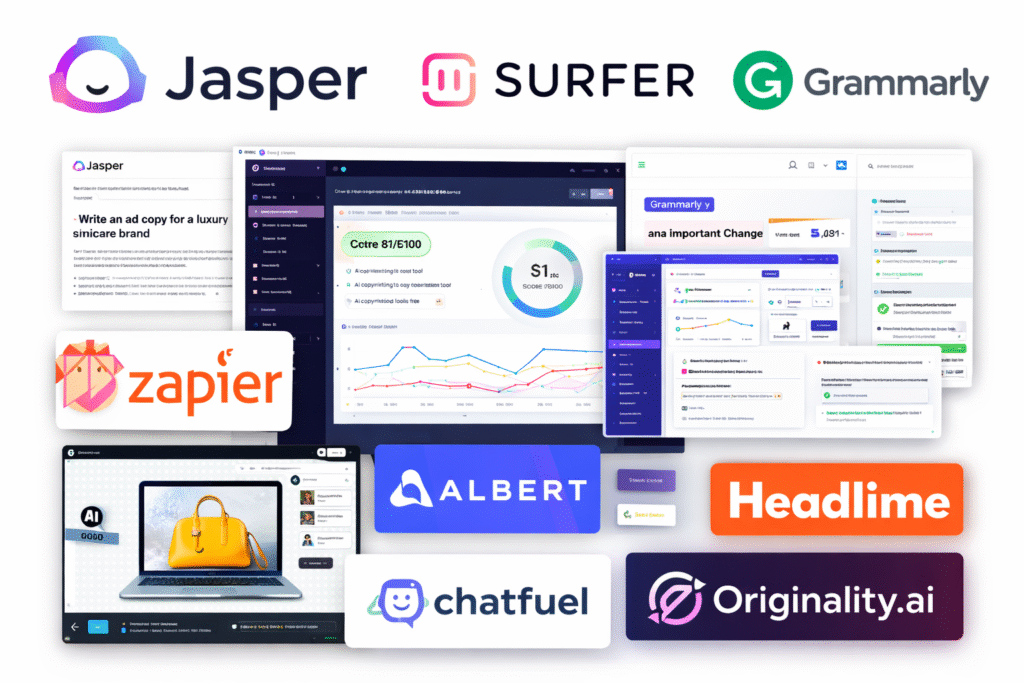
The market is full of platforms. Some focus on creatives. Others on analytics or automation. The best stack often combines multiple solutions.
Automation & Workflow
Zapier
Gumloop
They connect apps, move data, and trigger campaigns automatically.
Copy & Creative Generation
Jasper
Headline
Great for headlines, descriptions, and landing pages.
SEO & Content Support
Surfer SEO
ContentShake AI
They align ads with search intent and keyword opportunities.
Editing & Quality
Grammarly
Hemingway Editor
Clear writing improves conversions.
AI Visual Tools That Improve Ad Performance
Strong visuals increase clicks. However, poor design reduces trust. That is why AI-based creative tools are becoming essential in AI ad management.
Product Image Optimization
PhotoRoom removes backgrounds and enhances product photos instantly. As a result, e-commerce brands can launch cleaner ads without hiring designers.
AI-Generated Creative Concepts
Lexica creates custom visuals from text prompts. Therefore, marketers can test multiple creative angles faster.
In addition, faster creative testing leads to stronger campaign performance.

How AI Improves Campaign Performance
Performance growth usually comes from small gains repeated daily. AI multiplies those gains.
Predictive Audience Targeting
Algorithms find patterns humans miss. They predict who will buy before the click happens.
Automated Budget Allocation
Money moves toward winning ad sets. Poor performers lose spend automatically.
Faster Creative Testing
AI can rotate versions, pause losers, and scale winners. Testing becomes continuous.
Smart Bidding
Instead of fixed rules, bids adapt to competition and the probability of conversion.
Anomaly Detection
If something breaks, you know fast. Not after the budget is gone.

Implementing AI in Your Ad Strategy
Many businesses buy tools but never unlock results. Success needs structure.
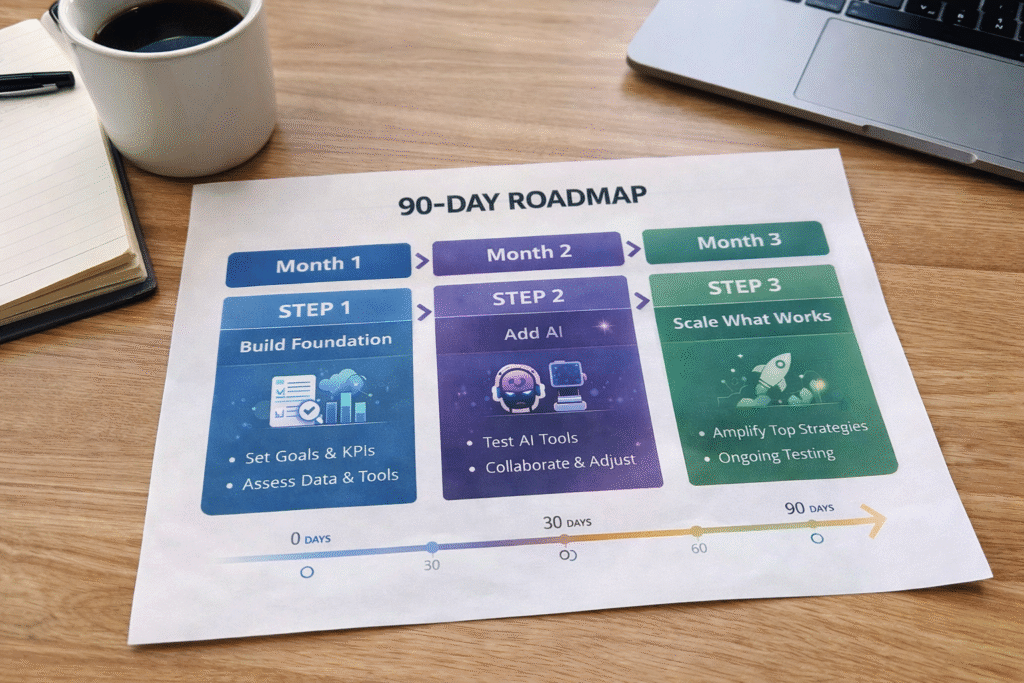
Month 1 – Build the Foundation
Set tracking. Clean data. Define KPIs. Understand your customer journey.
Month 2 – Add AI Enhancements
Introduce automation, predictive audiences, and creative assistance.
Month 3—Scale What Works
Increase budgets on proven combinations. Expand to new segments.
Keep Testing
AI improves with feedback. More experiments = smarter system.

Platform-Specific AI Strategies
Every advertising ecosystem offers different capabilities. Smart marketers adapt.
Google Ads
Use Performance Max, automated bidding, and conversion modeling. Feed strong data and creative variety.
Meta Ads
Broad targeting often works better. Let machine learning find buyers.
TikTok
Creative velocity matters most. AI helps generate and test rapidly.
YouTube
Combine intent with storytelling. Automation helps match formats to viewers.
Real-World Proof That AI Works
Theory is nice. Results are better.
JPMorgan Chase
Used AI-generated copy to improve engagement and conversions.
Nutella
Created thousands of unique label designs with automation.

Vanguard
Data-Driven Targeting Improvements
Vanguard improved campaign performance by refining its audience targeting models. Instead of relying on broad assumptions, the company analyzed behavioral data to identify higher-intent segments. As a result, ads reached users who were more likely to convert.
H4: Impact on Ad Efficiency
Because targeting became more precise, wasted spending decreased significantly. Moreover, conversion rates improved without increasing the overall budget. Therefore, the return on ad spend became stronger and more predictable.
What This Proves About AI
These results highlight one clear insight. AI strengthens strategy when it is guided by clear goals. However, it does not replace human planning. Instead, it supports smarter decision-making and continuous optimization.
Challenges You Must Prepare For
AI is powerful but not magic.
Data Quality
Bad inputs create bad outputs.
Privacy & Compliance
Respect regulations and user trust.
Human Creativity
Automation wins distribution. Humans win emotion.
Learning Curve
Teams need training to interpret insights correctly.
Conclusion
AI ad management has moved from experiment to necessity. Modern campaigns are too fast and too complex for manual control alone. Automation, predictive insights, and machine learning now drive the biggest performance gains.
When used correctly, AI helps you reach better audiences, reduce wasted spending, and react to change instantly. It turns testing into a continuous process instead of a one-time task.
The brands winning today are not replacing marketers. They are upgrading them with smarter systems.
Start small. Measure everything. Scale what proves profitable.
That is how better results are built.
H2: Frequently Asked Questions
Q1: How to improve ad performance with AI?
AI improves ad performance by analyzing user behavior and campaign data in real time. As a result, it automatically shifts budget toward high-performing ads. Smart bidding, predictive targeting, and continuous testing further increase ROI.
Q2: How does AI ad management work?
AI ad management uses machine learning to analyze data, predict outcomes, and optimize campaigns automatically. Instead of manual adjustments, the system makes real-time decisions based on performance signals.
Q3: Which AI tools are best for ad optimization?
The best tools depend on your goal. Some focus on automated bidding, while others improve creatives or audience targeting. However, the most effective strategy often combines multiple AI solutions.
Q4: Can AI reduce advertising costs?
Yes, AI reduces costs by minimizing wasted spending. Because it targets high-intent users and pauses underperforming ads quickly, budgets are used more efficiently.
Q5: Does AI replace human marketers?
No. AI supports marketers, but it does not replace them. While automation handles data and optimization, humans provide strategy, creativity, and brand direction.