
introduction:
RPA in healthcare is transforming the way hospitals and medical organizations operate in 2026 by combining automation with artificial intelligence to simplify complex healthcare workflows. From patient registration and billing to clinical documentation and real-time monitoring, modern healthcare systems are rapidly shifting toward intelligent automation to improve speed, accuracy, and patient experience.
In today’s digital healthcare environment, hospitals face increasing pressure to reduce administrative workload, minimize human errors, and deliver faster services. This is where RPA (Robotic Process Automation) and AI-powered tools play a crucial role by automating repetitive tasks and enabling medical staff to focus more on patient care rather than manual processes.
The integration of AI tools with RPA is creating a new era of smart healthcare systems where software bots handle routine operations such as claims processing, appointment scheduling, and data management with high precision and efficiency. As a result, healthcare organizations are achieving better operational performance, stronger compliance, and improved decision-making capabilities.
In this RPA in Healthcare: AI Tools Complete Guide 2026, we will explore how intelligent automation is reshaping the healthcare industry, its key use cases, major benefits, implementation strategies, and future trends that are defining the next generation of digital healthcare systems.
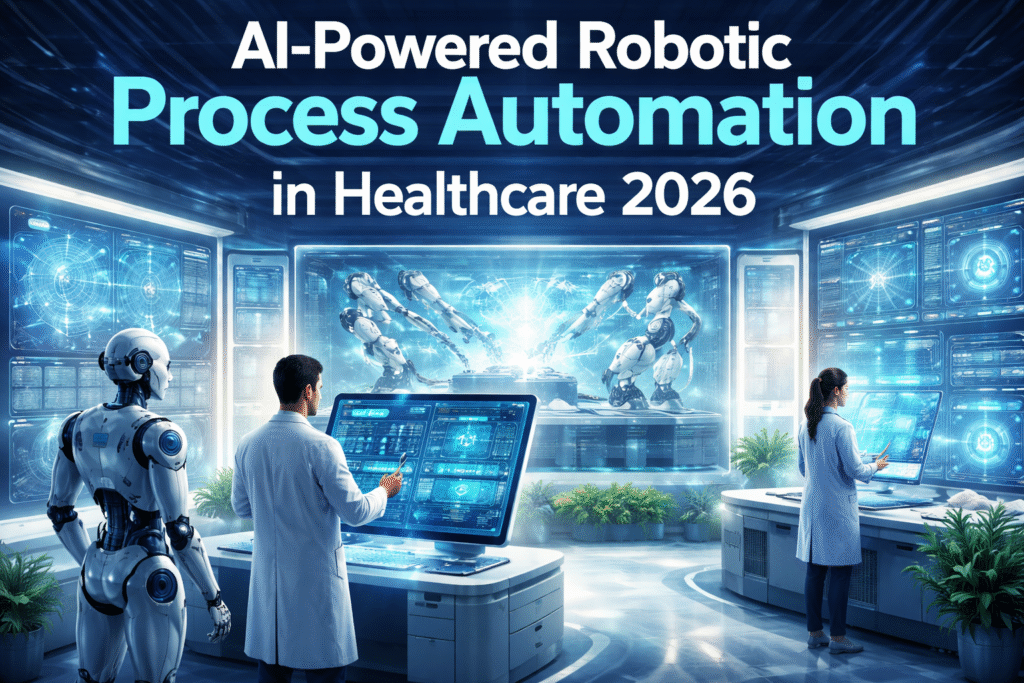
What is RPA and AI in Healthcare?
Robotic Process Automation (RPA) and Artificial Intelligence (AI) in healthcare refer to the integration of intelligent software systems that automate repetitive clinical and administrative tasks while improving decision-making through data-driven insights. In modern healthcare systems, this combination is not just about automation but about creating smarter workflows where machines and humans work together seamlessly.
RPA focuses on rule-based task automation such as data entry, appointment scheduling, and billing processes, while AI enhances these systems by adding cognitive abilities like prediction, analysis, and decision support. Together, they form a powerful ecosystem that is transforming hospitals into digitally connected, efficient, and patient-centered environments.
Role of intelligent automation in modern healthcare
Intelligent automation plays a crucial role in reducing operational burden on healthcare staff by handling repetitive administrative tasks. It allows medical professionals to focus more on patient care rather than paperwork and manual data processing.
Difference between RPA, AI, and Agentic Automation
RPA executes structured tasks, AI analyzes and predicts outcomes, while agentic automation takes full autonomous actions based on real-time data without human intervention. This layered approach creates a fully intelligent healthcare system.
Healthcare AI & RPA Use Cases (2026)
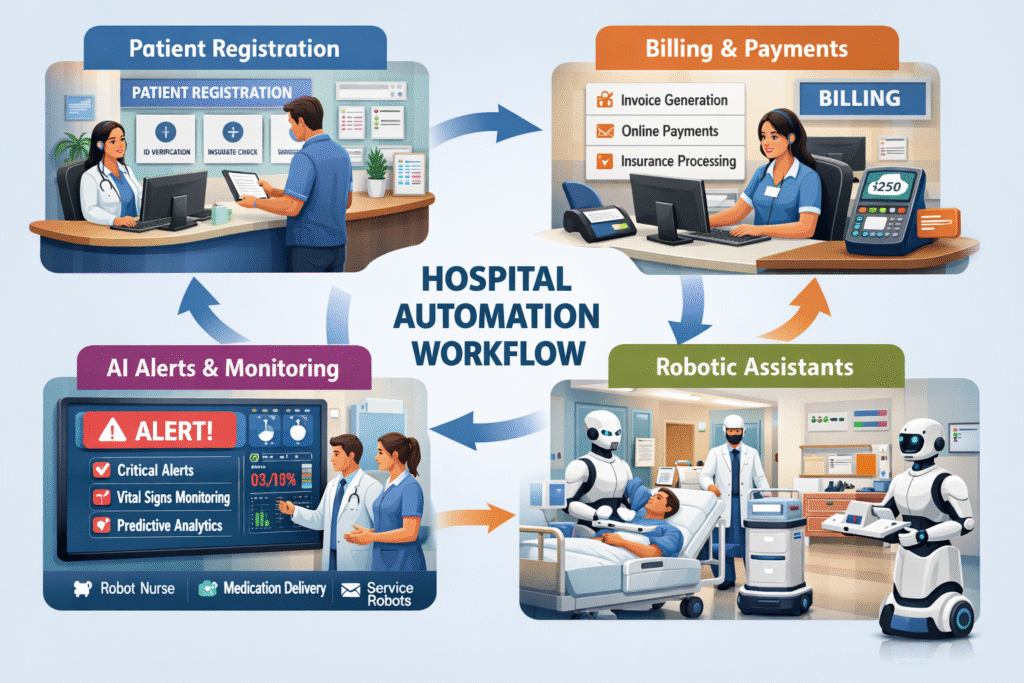
The application of RPA and AI in healthcare is expanding rapidly, covering almost every aspect of hospital operations. From patient onboarding to advanced medical monitoring, automation is becoming the backbone of modern healthcare systems.
Patient onboarding & registration automation
Healthcare systems now use RPA to automate patient registration, reducing waiting times and eliminating manual data entry errors. Patients can be registered instantly through digital forms integrated with hospital databases.
AI-powered diagnosis support systems
AI tools assist doctors by analyzing patient symptoms, medical history, and test results to suggest possible diagnoses. This improves accuracy and speeds up clinical decision-making.
Claims & insurance processing automation
Insurance claims are processed faster using RPA bots that validate data, detect errors, and submit claims automatically, reducing administrative delays and improving revenue cycles.
Clinical documentation enhancement
AI tools convert voice or handwritten notes into structured digital records, ensuring accurate and real-time documentation of patient information.
Remote monitoring & wearable integration
Wearable devices collect real-time patient data such as heart rate, oxygen levels, and activity tracking. RPA systems analyze this data and alert healthcare providers in case of abnormalities.
Hospital bed & emergency management systems
Automation helps hospitals manage bed availability and emergency cases efficiently by allocating resources in real time based on patient priority and hospital capacity.
Key Benefits of RPA in Healthcare
The adoption of RPA and AI technologies in healthcare brings significant improvements in efficiency, cost management, and patient satisfaction. These benefits are reshaping how hospitals operate globally.
Faster operations and reduced manual work
Automation eliminates repetitive manual tasks, allowing healthcare staff to complete processes faster and with fewer errors.
Cost savings and ROI improvement
By reducing dependency on manual labor and optimizing workflows, healthcare organizations significantly reduce operational costs while improving return on investment.
Better patient experience & personalization
Patients receive faster service, reduced waiting times, and more personalized care due to streamlined automated systems.
Improved compliance and data security
Automation ensures that healthcare data is processed according to strict compliance standards, reducing risks of human error and data breaches.
Reduced human errors in healthcare workflows
RPA minimizes mistakes in data entry, billing, and reporting, ensuring higher accuracy in medical and administrative processes.
Challenges of Implementing RPA in Healthcare
Despite its benefits, implementing RPA in healthcare comes with certain challenges that organizations must address carefully to ensure successful adoption.
Data privacy and security risks
Healthcare data is highly sensitive, and improper automation can lead to security vulnerabilities if not properly managed.
Legacy system integration issues
Many hospitals still rely on outdated systems that are difficult to integrate with modern automation tools.
Workforce resistance and training needs
Healthcare staff may resist automation due to fear of job displacement, requiring proper training and change management strategies.
High implementation cost
Initial setup costs for RPA systems and AI integration can be high, especially for large healthcare organizations.
Ethical AI and compliance challenges
Ensuring ethical use of AI in healthcare decision-making remains a major concern, especially in critical medical scenarios.
AI + RPA Future Trends in Healthcare
The future of healthcare automation is driven by advanced technologies that go beyond traditional RPA systems, creating fully autonomous healthcare ecosystems.
Agentic AI healthcare systems
These systems operate independently, making real-time decisions without human intervention, improving efficiency in critical healthcare operations.
Hyperautomation in hospitals
Hyperautomation combines RPA, AI, and machine learning to automate entire hospital workflows end-to-end.
Smart wearable integration
Wearable devices connected to AI systems enable continuous patient monitoring and proactive healthcare management.
Predictive healthcare analytics
AI analyzes large datasets to predict diseases and improve preventive care strategies.
Blockchain-based patient data security
Blockchain ensures secure, transparent, and tamper-proof storage of patient records.
Content Marketing Company USA: How to Hire the Best Services
How to Implement RPA in Healthcare Systems
Successful implementation of RPA in healthcare requires a structured approach that ensures scalability, efficiency, and compliance.
Identify automation-ready processes
Hospitals must first identify repetitive and rule-based tasks that are suitable for automation.
Select AI & RPA tools
Choosing the right tools ensures smooth integration and long-term scalability of automation systems.
Build Proof of Concept (PoC)
A small-scale pilot project helps validate automation effectiveness before full deployment.
Deploy and scale automation systems
Once tested, automation systems are deployed across departments and scaled gradually.
Monitor performance and optimize workflows
Continuous monitoring ensures systems remain efficient and updated with evolving healthcare needs.
Measuring ROI of Healthcare Automation
Healthcare organizations must evaluate the financial and operational impact of RPA to ensure long-term value.
Cost vs savings analysis
Organizations compare implementation costs with long-term savings achieved through automation.
Productivity improvement metrics
Performance is measured by reduced processing time and increased operational efficiency.
Patient outcome tracking
Better automation leads to improved patient care and faster treatment outcomes.
Long-term scalability benefits
RPA systems allow hospitals to scale operations without increasing manpower significantly.
Conclusion:
Robotic Process Automation in Healthcare AI Tools Guide clearly shows that healthcare is entering a new era where automation and intelligence work together to reshape every level of medical operations. From patient registration and billing to clinical documentation and predictive analytics, RPA combined with AI is helping hospitals become faster, more accurate, and more patient-focused than ever before.
As healthcare systems continue to evolve in 2026, organizations that adopt intelligent automation will gain a significant advantage in efficiency, cost reduction, and service quality. The integration of AI tools with RPA is not just improving workflows; it is redefining how healthcare services are delivered, managed, and optimized.
However, successful implementation requires careful planning, proper security measures, and a clear understanding of both technical and ethical challenges. Hospitals that balance technology with human expertise will achieve the best results, ensuring better patient care while maintaining compliance and trust.
Ultimately, RPA and AI are not replacing healthcare professionals; they are empowering them to work smarter, reduce workload pressure, and focus more on what truly matters: saving lives and improving patient outcomes.

FAQs:
What is robotic process automation in healthcare?
Robotic Process Automation in healthcare uses software bots to automate repetitive tasks like patient registration, billing, and data entry. It helps hospitals improve efficiency, reduce errors, and save time.
How do AI tools enhance RPA in healthcare systems?
AI tools add intelligence to RPA by enabling data analysis, predictive insights, and decision-making. This combination allows healthcare systems to automate complex processes like diagnosis support and patient monitoring.
What are the most common use cases of RPA in healthcare?
The most common use cases include patient onboarding, appointment scheduling, medical billing, insurance claims processing, clinical documentation, and remote patient monitoring.
Is RPA safe for handling sensitive healthcare data?
Yes, when implemented correctly, RPA systems follow strict security protocols such as encryption, access control, and compliance standards to protect patient data and ensure privacy.
What are the main benefits of using AI tools in healthcare automation?
AI tools improve speed, accuracy, and efficiency. They reduce manual workload, enhance patient experience, support better decision-making, and help healthcare organizations lower operational costs.
What challenges do hospitals face when implementing RPA?
Common challenges include data security concerns, integration with legacy systems, high initial costs, and the need for staff training and change management.
Can small healthcare clinics use RPA and AI tools?
Yes, modern RPA and AI solutions are scalable and can be used by small clinics to automate tasks like scheduling, billing, and patient data management without requiring large infrastructure.
What is the future of RPA in healthcare?
The future includes advanced AI integration, agentic automation, predictive analytics, smart hospitals, and fully automated healthcare workflows that improve patient care and operational efficiency.
How does RPA improve patient experience in hospitals?
RPA reduces waiting times, speeds up processes, ensures accurate data handling, and enables personalized care, leading to a smoother and more satisfying patient experience.
Do RPA tools require coding skills to use?
Most modern RPA tools are low-code or no-code, allowing healthcare staff to use them easily without advanced programming knowledge.
CTA:
Ready to Transform Your Healthcare System?
If you want to stay ahead in the digital healthcare era, now is the time to adopt Robotic Process Automation in Healthcare. AI Tools Guide strategies and turn your workflows into smart, efficient, and future-ready systems.
Don’t let outdated processes slow you down. Start automating your hospital operations, reduce costs, improve patient care, and unlock the true power of AI-driven healthcare today.
Take the first step now, explore the right AI tools, implement RPA, and build a smarter healthcare system that delivers faster results and better patient outcomes.
